By Pete Stiglich
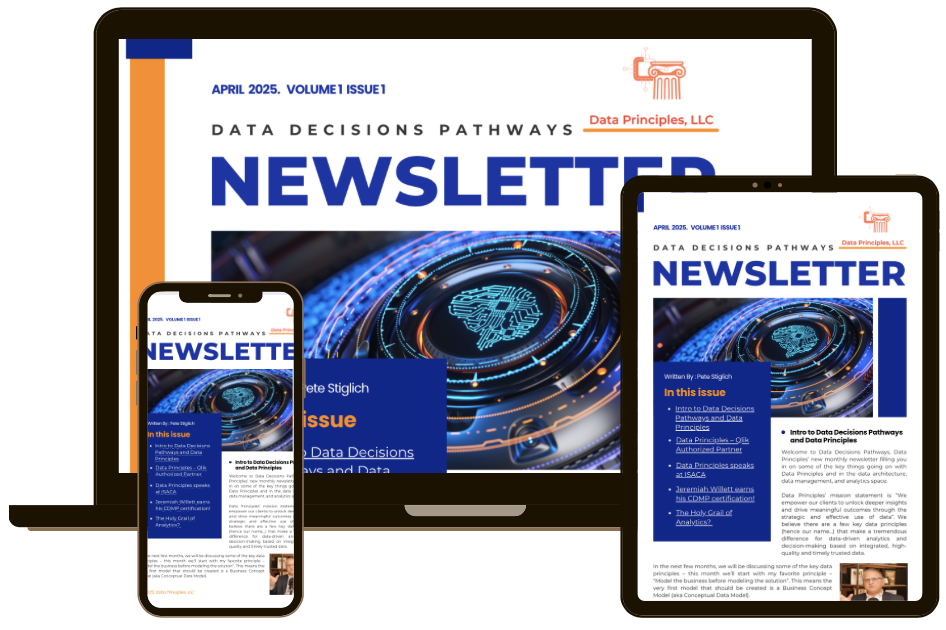
Explains that conceptual data modeling is essential for ensuring high data and information quality. It emphasizes that data quality depends not only on accurate values but also on understanding the business meaning and relationships between data elements, known as data context. A conceptual data model provides a high-level, technology-independent view of key business entities and how they relate, helping stakeholders share a common understanding of the data. Without this model, systems may be built with incorrect assumptions, leading to missing or misrepresented relationships, data duplication, and long-term quality issues. The article concludes that developing a conceptual data model early in a project reduces costly errors later and forms a strong foundation for logical and physical data models, ultimately improving information quality across the organization.
Disclaimer
Links to third-party articles and resources are provided for informational purposes only. Data Principles, LLC does not claim ownership of, nor imply endorsement by, the referenced organizations.

Pete Stiglich: Trusted Expert in Data Architecture & Modeling
Pete has over 30 years of data architecture, data management, and analytics experience, most of that time as a consultant in industries such as government, finance, healthcare, insurance, and more. He is an industry thought leader in data architecture and data modeling and has developed and taught many courses on these topics. Pete enjoys helping clients solve complex data problems, leveraging proven approaches such as “Modeling the business before modeling the solution” which provides a benefit to clients that many IT professionals miss.
Join Our Data Community
At Data Principles, we believe in making data powerful and accessible. Get monthly insights, practical advice, and company updates delivered straight to your inbox. Subscribe and be part of the journey!