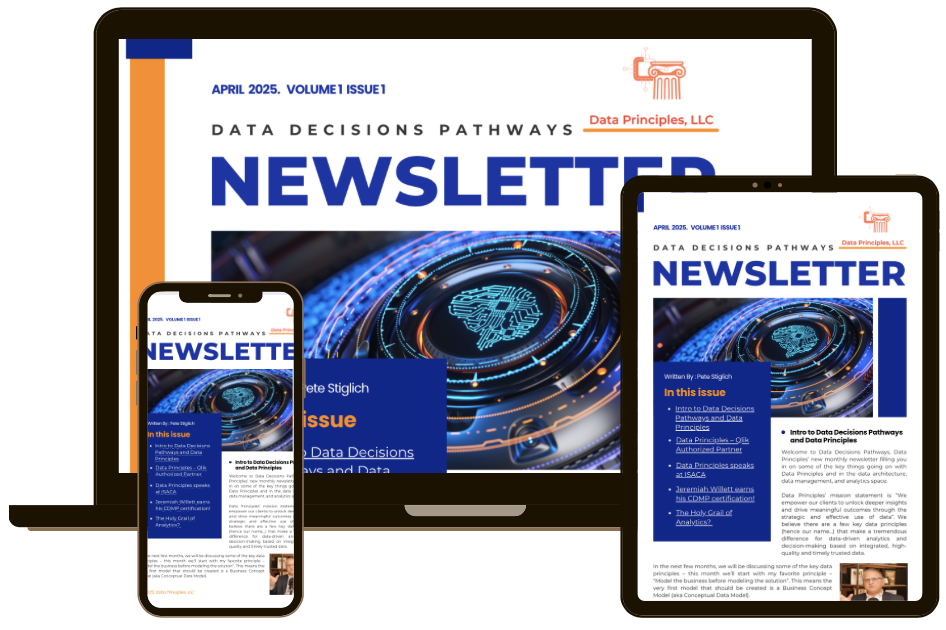
By Pete Stiglich
Discusses why the transition from ICD‑9 to ICD‑10 is high-stakes and complex for providers and payers: code mappings are often not 1:1, processes and policies change, staff retraining is required, and many systems must be remediated to handle new alphanumeric/longer codes. The article connects this complexity to metadata management: to find every impacted process, interface, database field, report, and rule, organizations need reliable metadata and lineage. Strong metadata practices reduce blind spots, improve impact analysis, and help manage testing and compliance as the code system changes across the enterprise.
Disclaimer
Links to third-party articles and resources are provided for informational purposes only. Data Principles, LLC does not claim ownership of, nor imply endorsement by, the referenced organizations.

Pete Stiglich: Trusted Expert in Data Architecture & Modeling
Pete has over 30 years of data architecture, data management, and analytics experience, most of that time as a consultant in industries such as government, finance, healthcare, insurance, and more. He is an industry thought leader in data architecture and data modeling and has developed and taught many courses on these topics. Pete enjoys helping clients solve complex data problems, leveraging proven approaches such as “Modeling the business before modeling the solution” which provides a benefit to clients that many IT professionals miss.
Join Our Data Community
At Data Principles, we believe in making data powerful and accessible. Get monthly insights, practical advice, and company updates delivered straight to your inbox. Subscribe and be part of the journey!